What materials work best for poolside outdoor sculptures?
Transforming your pool deck into a luxury oasis often involves introducing large-scale, statement art pieces. However, selecting an outdoor sculpture for a poolside environment is vastly different from curating art for a dry garden or an indoor gallery. The poolside environment is arguably one of the harshest micro-climates on any property.
A sculpture placed within proximity of a swimming pool is subjected to a relentless onslaught of highly corrosive elements: splashing chlorinated water, airborne salt vapor from saltwater systems, aggressive UV radiation from the sun, and fluctuating humidity. If you choose the wrong material, a costly art investment can quickly become a rusting, staining eyesore. In this comprehensive guide, we rank and analyze the best materials for outdoor poolside sculptures, ensuring your investment remains pristine for decades to come.
1. The Gold Standard: Marine-Grade 316 Stainless Steel
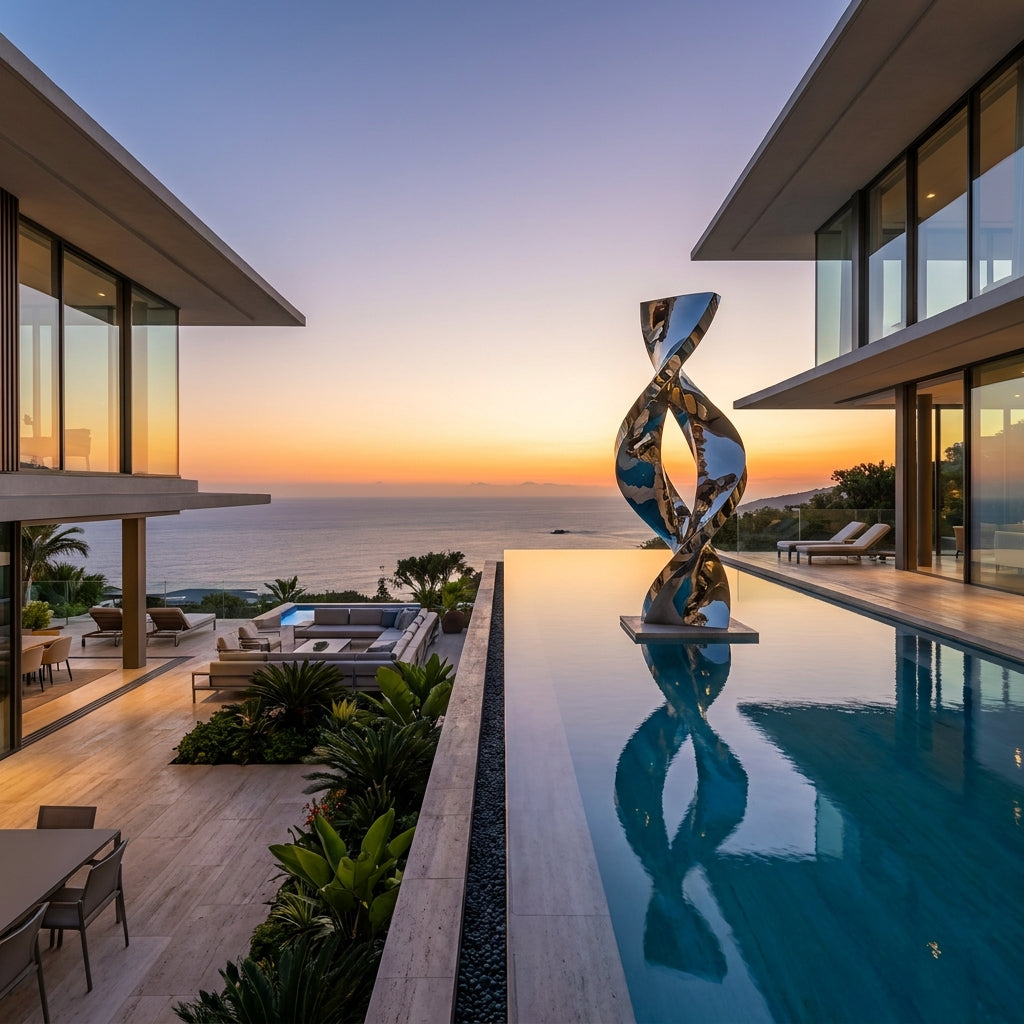
When it comes to modern, sleek aesthetics and unparalleled resistance to pool chemistry, stainless steel is the reigning champion. Its reflective, mirror-like surface beautifully bouncing sunlight and the rippling blue hues of the pool water make it a designer favorite.
Why 316-Grade is Non-Negotiable
It is absolutely vital to specify Grade 316 (or 316L) stainless steel, often referred to as "marine grade." Many outdoor sculptures are forged from Grade 304 steel, which is perfectly fine for mid-west gardens or urban parks. However, 304 lacks molybdenum, a specific alloying agent present in 316 steel that provides drastically enhanced resistance to chlorides (found in salt and chlorine). If you place a 304 steel sculpture next to a pool, it is highly likely to develop "tea staining"—unsightly brown rust spots. 316 steel will easily shrug off these corrosive chemical attacks.
- Durability: Exceptional. Resistant to pitting and corrosion.
- Maintenance: Very low. Requires only periodic rinsing with fresh water to remove chemical residue and the occasional wipe-down with non-abrasive stainless polish to remove basic water spots.
- Best Vibe: Modern, contemporary, futuristic, minimal.

2. The Timeless Contender: Solid Bronze
Bronze is arguably the most historically significant sculptural material in human history. It possesses a visual warmth, weight, and gravitas that modern metals sometimes lack. Because it is an alloy primarily of copper and tin, bronze does not rust structurally the way iron does.
However, bronze presents unique challenges near pools. Over time, bronze naturally oxidizes and develops a patina. When splashed repeatedly with highly alkaline chlorinated water or salt vapor, this oxidation accelerates uncontrollably. This can lead to "bronze disease," manifesting as powdery, chalky green or white streaks that ruin the intended finish.
- Durability: Structurally indestructible, but surface-sensitive.
- Maintenance: Moderate to High. A poolside bronze sculpture requires an aggressive defense strategy. It must be thoroughly coated in a museum-grade microcrystalline clear paste wax at least three to four times a year. This wax acts as a sacrificial barrier against the pool spray.
- Best Vibe: Classic, organic, figurative, luxurious estates, traditional grounds.
3. The Lightweight Alternative: Marine-Grade Aluminum
For large-scale abstract forms, aluminum is a fantastic choice. It is naturally lightweight (making installation on pool coping or floating pedestals much easier) and does not rust. When exposed to air, aluminum instantly forms a microscopic layer of aluminum oxide, which protects the metal underneath from further decay.
To survive a pool environment, however, raw aluminum is not enough. The sculpture should be professionally anodized or powder-coated. A high-quality powder coat creates a seamless plastic-like shell over the metal, rendering it highly resistant to salt and chlorine splash. Furthermore, powder coating allows you to introduce vibrant, pop-art colors to your pool deck (e.g., a bright red or electric blue statue).
- Durability: High, provided the coating is not deeply scratched.
- Maintenance: Low. Simple soap and water wash.
- Best Vibe: Pop-art, highly conceptual, bright contemporary spaces.

4. The Value Options: Fiberglass and Resin
Modern fiberglass and high-density resins are extremely versatile. Artists can sculpt them to mimic the exact textures of stone, bronze, or polished marble at a fraction of the weight and cost. Because these materials are inherently non-porous and non-metallic, they are entirely immune to rust, chloride pitting, and electrolysis.
The primary concern with fiberglass in a luxury poolside setting is UV degradation. In areas with intense year-round sunshine, fiberglass surfaces can slowly yellow, chalk, or become brittle over a decade unless finished with high-quality automotive-grade clear coats containing UV inhibitors.
- Durability: Good, but subject to long-term sun weathering.
- Maintenance: Low. Wash with mild soap and water.
- Best Vibe: Cost-effective alternatives, highly complicated/detailed molds.
5. The Material to Absolutely Avoid: Corten Steel
Corten steel, also known as "weathering steel," is immensely popular in massive outdoor public parks and dry desert landscapes. It is designed to rapidly rust on the surface, creating a beautiful, earthy orange/brown patina that seals the interior metal.
Never place a Corten steel sculpture next to a swimming pool. During the prolonged period it takes for the rust layer to stabilize (which can take years), rainwater, morning dew, and pool splashes will cause the orange rust to "bleed" and run off the statue. This acidic rust runoff will rapidly and permanently stain your expensive concrete, travertine, or limestone pool decking. Furthermore, the constant barrage of pool chemicals can prevent the Corten rust from ever fully stabilizing, causing the steel to eventually flake and degrade.
Invest Wisely with VELA SCULPTURE
At VELA SCULPTURE, we specialize in specifying the exact alloys and protective finishes necessary to guarantee your artwork survives the harshest environments. If you are designing a high-end luxury pool space, do not leave material science to chance.
Get Expert Material Advice