How to Choose the Right Sculpture for Your Poolside Space?
A swimming pool is often the architectural centerpiece of a luxury backyard. It is a place of relaxation, entertainment, and visual tranquility. By introducing a carefully curated sculpture to your poolside space, you elevate the area from a simple recreational zone into a breathtaking, resort-style oasis.
However, choosing art for a poolside environment is vastly different from selecting a piece for a living room or a dry garden. A poolside sculpture must withstand punishing UV rays, high humidity, and most importantly, the corrosive nature of chlorine or saltwater systems. In this comprehensive guide, we will walk you through the essential factors to consider—from material science to reflective aesthetics—when choosing the perfect sculpture for your pool area.
Section 1: The Material Matters — Surviving Chlorine and Salt
The greatest threat to outdoor art near a swimming pool is chemical corrosion. Splash-out from chlorinated water and the ambient salt vapor from saltwater pools can rapidly degrade inferior materials. Your choice of metal is the single most important decision you will make.
Marine-Grade Stainless Steel (The Modern Champion)
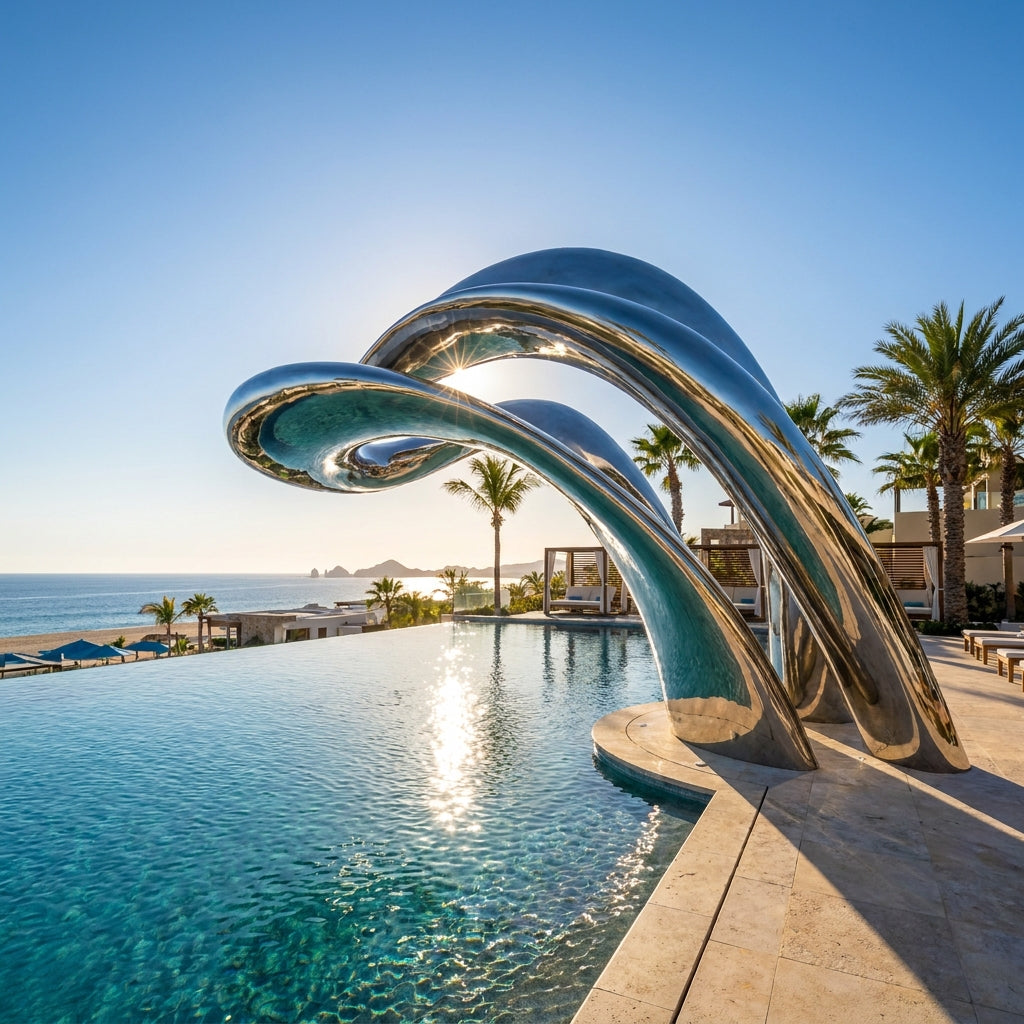
For sleek, contemporary pool decks, polished stainless steel is the premier choice. However, not all stainless steel is equal. You must specify Grade 316 (or 316L) marine-grade stainless steel. Unlike the more common Grade 304, Grade 316 contains molybdenum, an alloying agent that drastically increases resistance to chlorides (salt and pool chemicals). A highly polished 316 stainless steel sculpture will easily repel pool water and maintain its mirror-like finish for decades.
Classic Bronze (The Timeless Option)
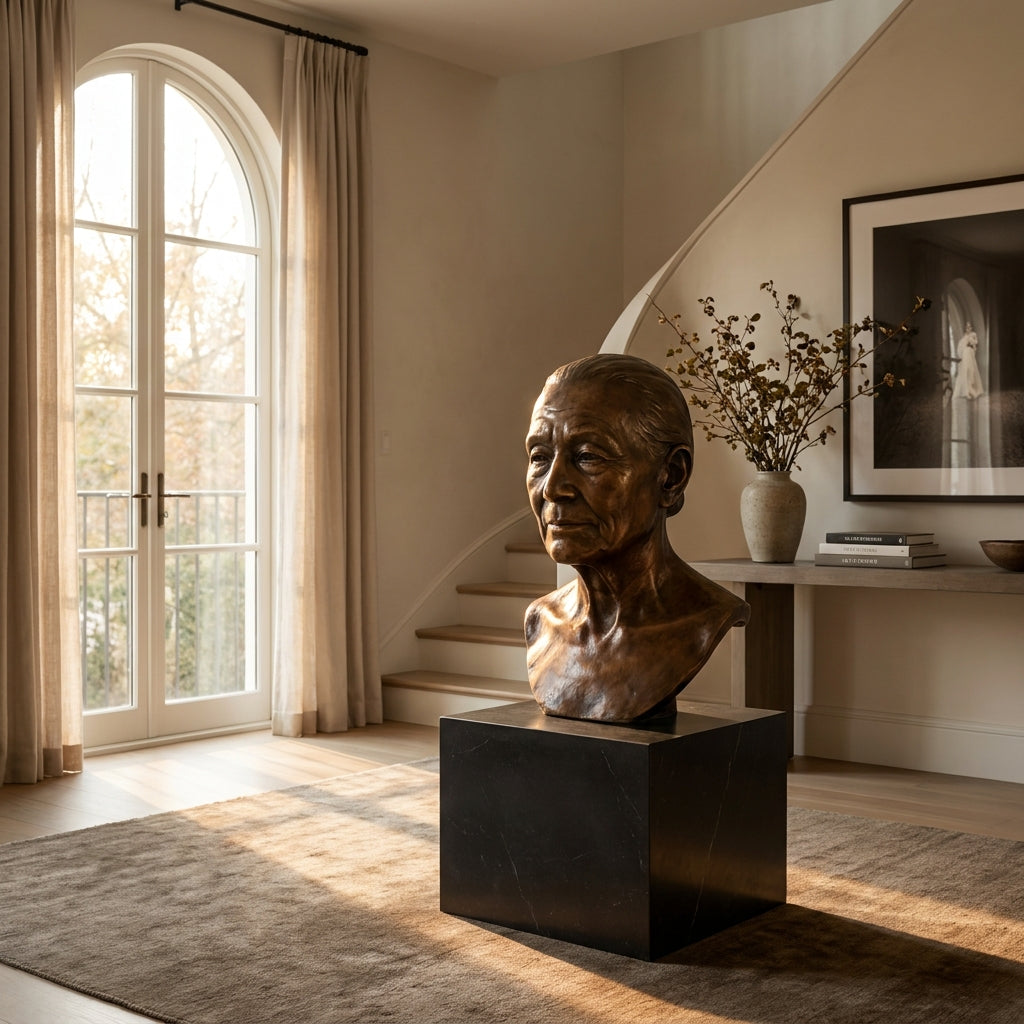
Bronze is incredibly durable and favored for classical, organic, or figurative designs. While bronze will not rust away structurally, its surface patina (the colored finish) is sensitive to pool chemicals. Direct, repeated splashing of highly alkaline or chlorinated water can cause the bronze to develop "bronze disease" or unwanted green/white oxidation spots. If you choose bronze, it requires strategic placement away from the immediate splash zone and a rigorous waxing schedule.

Section 2: Mastering Scale, Placement, and Reflection
Once you have selected a durable material, the next step is determining the scale of the piece and exactly where it will reside. A pool offers a unique visual advantage that dry land does not: reflection.
Utilizing the Water as a Canvas
- The Mirror Effect: The calm surface of a pool acts as a massive mirror. By placing a sculpture near the water’s edge—particularly on the far side of the pool facing the main seating area—you create a stunning double image. This works exceptionally well with abstract stainless steel pieces, as both the sky and the sculpture are reflected simultaneously in the water.
- Scale and Proportion: A large pool swallows small objects visually. If your pool is expansive, do not be afraid to commission a "heroic" scale piece (over 6 feet tall). A tiny, delicate statuette will look cluttered and out of place against an 800-square-foot body of water. Keep the proportions balanced.
- Avoid the Splash Zone: For both the longevity of the art and the safety of the swimmers, the sculpture should be set back at least 3 to 4 feet from the coping (the edge of the pool). This prevents accidental collisions and dramatically reduces the amount of chlorinated splash the statue receives.
Section 3: Structural Safety and Base Installation
Pool decks are high-traffic, slippery areas. A heavy metal or stone sculpture must be installed with absolute structural integrity to ensure it never tips or poses a danger.
| Safety Factor | Installation Guideline |
|---|---|
| Wind & Tipping Resistance | Never leave a tall sculpture freestanding near a pool. It must be chemically anchored or bolted directly into a reinforced concrete footer beneath the pool decking. |
| Preventing Electrolysis | If bolting a bronze statue down using steel bolts, a rubber or silicone gasket must be placed between the elements to stop galvanic corrosion (metals reacting chemically when wet). |
| Edge Safety | Ensure the design of the sculpture does not feature sharp, eye-level protrusions pointing toward walkways. Pool areas involve running children and wet bare feet; safety is paramount. |

Section 4: Maintenance Routines for Poolside Art
To keep your investment looking pristine year after year, a strict but simple maintenance routine must be instituted.
- The Weekly Rinse: Make it a habit to lightly hose down the sculpture with fresh, non-chlorinated tap water once a week. This washes away salt vapor, chlorine residue, and bird droppings before they can etch into the metal.
- Cleaning Stainless Steel: If you notice water spots on polished steel, use a soft microfiber cloth and a mild glass cleaner or specialized stainless steel polish. Never use abrasive scrubbing pads.
- Waxing Bronze: Poolside bronze requires aggressive defense. Apply a thick coat of museum-grade microcrystalline clear paste wax at least three times a year (Spring, Mid-Summer, and Autumn). This sacrificial barrier is all that protects the delicate colored patina from the harsh alkaline pool water.
Elevate Your Poolside Experience with VELA SCULPTURE
Whether you desire a marine-grade 316L stainless steel abstract centerpiece or a classical bronze figure, our expert artisans know exactly how to engineer art for extreme environments.
Consult Our Design Team