What to Prepare Before Ordering a Bronze Tribute Statue?
Commissioning a custom bronze tribute statue is one of the most powerful and enduring ways to honor a loved one, a historical figure, or an organizational founder. Because bronze is designed to last for generations, the process of creating one is an intricate journey that intertwines deep personal narrative with masterful, labor-intensive craftsmanship.
Whether you are placing the tribute in a private estate garden, a corporate headquarters, or a public memorial park, adequate preparation is the cornerstone of a successful commission. Below, we provide an exhaustive guide on exactly what you need to prepare before commissioning a bronze sculptor, ensuring your vision is captured flawlessly and the process remains seamless from concept to casting.
Section 1: The Vital Importance of Reference Materials
The sculptor’s primary bridge to your vision鈥攁nd the likeness of the subject鈥攊s the reference material you provide. Since the artist often relies entirely on these materials to capture not just physical accuracy but the essence and personality of the subject, preparation here is paramount.
The Visual Arsenal You Must Gather
- The Primary Angle (Frontal): High-resolution, well-lit photos showing the subject looking straight ahead. This defines the core facial structure.
- Profiles and Angles: Many commissioners forget side (profile) and three-quarter angles. A sculptor is building in three dimensions; therefore, the depth of the nose, the curve of the jawline, and the shape of the back of the head are impossible to guess accurately without side profiles.
- Candid and Candid Lighting: Studio-lit portraits are great for detail, but candid photos often capture the "true" expression of the subject. A signature squint, a subtle asymmetrical smile, or a relaxed posture are often found in unguarded moments.
- Video Footage (If Available): A video provides a sculptor with a moving 360-degree reference. It reveals how the subject carries themselves, their skeletal posture, and how their facial muscles move dynamically.
- Physical Details: If specific elements are essential鈥攕uch as a favorite watch, a highly specific military medal, eyeglasses, or a beloved cane鈥攑rovide close-up reference shots of those items to ensure the clay model faithfully incorporates them.
Section 2: Determining Pose, Scale, and Context
Before entering detailed discussions with a foundry or studio, you should have a solid foundation regarding how the piece will physically exist in space.
Emotion and Pose
What feeling do you want the monument to evoke? A seated, relaxed posture invites observers to sit near the tribute and reflect quietly. Conversely, a standing, dynamic posture with the subject gazing into the distance conveys leadership, vision, and action. Ask yourself: "If this statue could speak one sentence to future generations, what would it be saying?" The answer will dictate the pose.
The Importance of Scale
Scale dictates presence. Consider your options carefully:
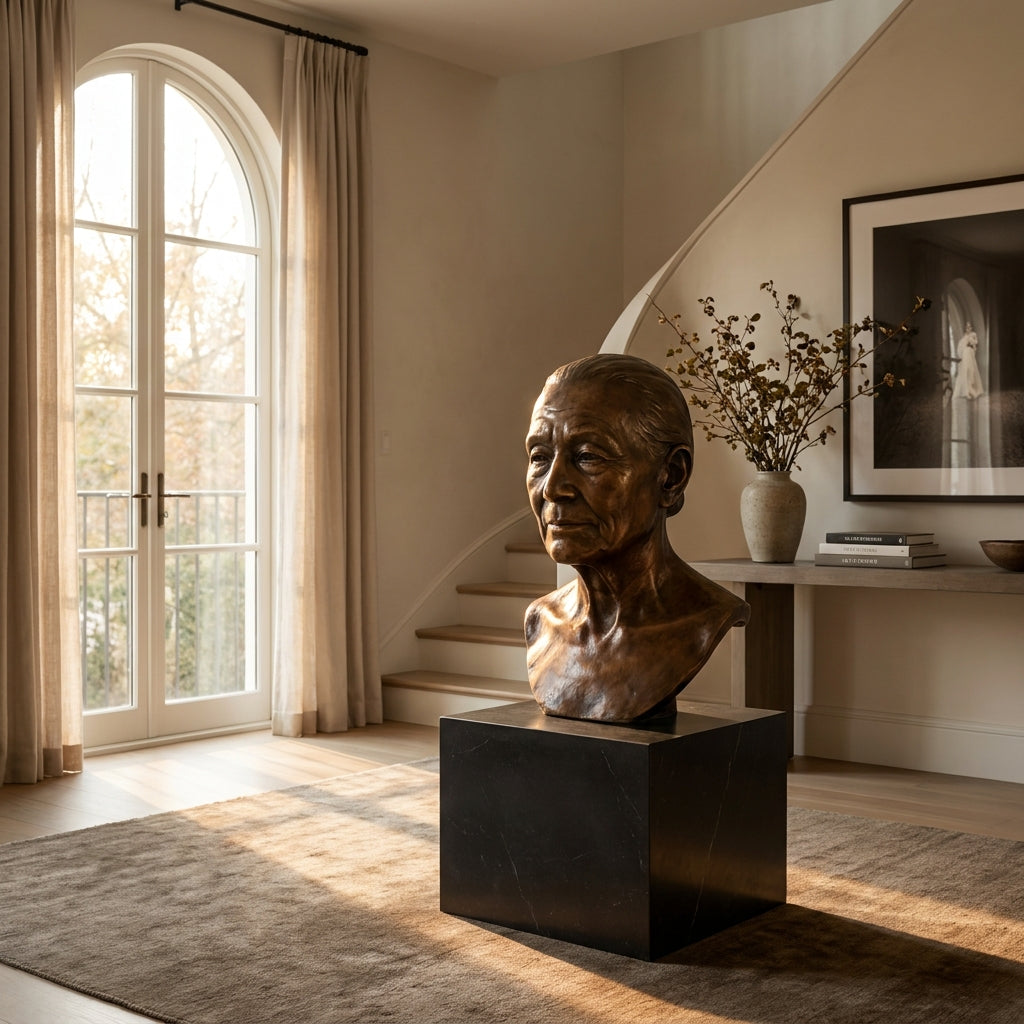
- Busts and Half-Life: Perfect for intimate spaces, indoor pedestals, or localized memorial plots.
- Life-Size (1:1 Ratio): This is the standard for human tributes, offering a highly relatable, realistic presence. Visitors feel as though they are interacting directly with the subject.
- Heroic Scale (1_ times life-size or larger): If the statue will be placed outdoors in a large public square, a life-size statue will visually "shrink" due to the massive open sky and surrounding architecture. A heroic scale ensures the figure commands the space appropriately.

Section 3: Understanding the Foundational Requirements
A bronze statue cannot simply be placed on soft dirt. It is a heavy, permanent installation that requires civil and structural forethought.
Site Selection and Zoning
If placing the tribute on private property, you generally have free reign. However, if the statue is to be placed in a cemetery, a public park, a school campus, or a civic plaza, you must begin the permitting process immediately. Many public institutions have strict design boards, size constraints, and material regulations that must be approved before you sign a sculptor contract.
The Base and Pedestal
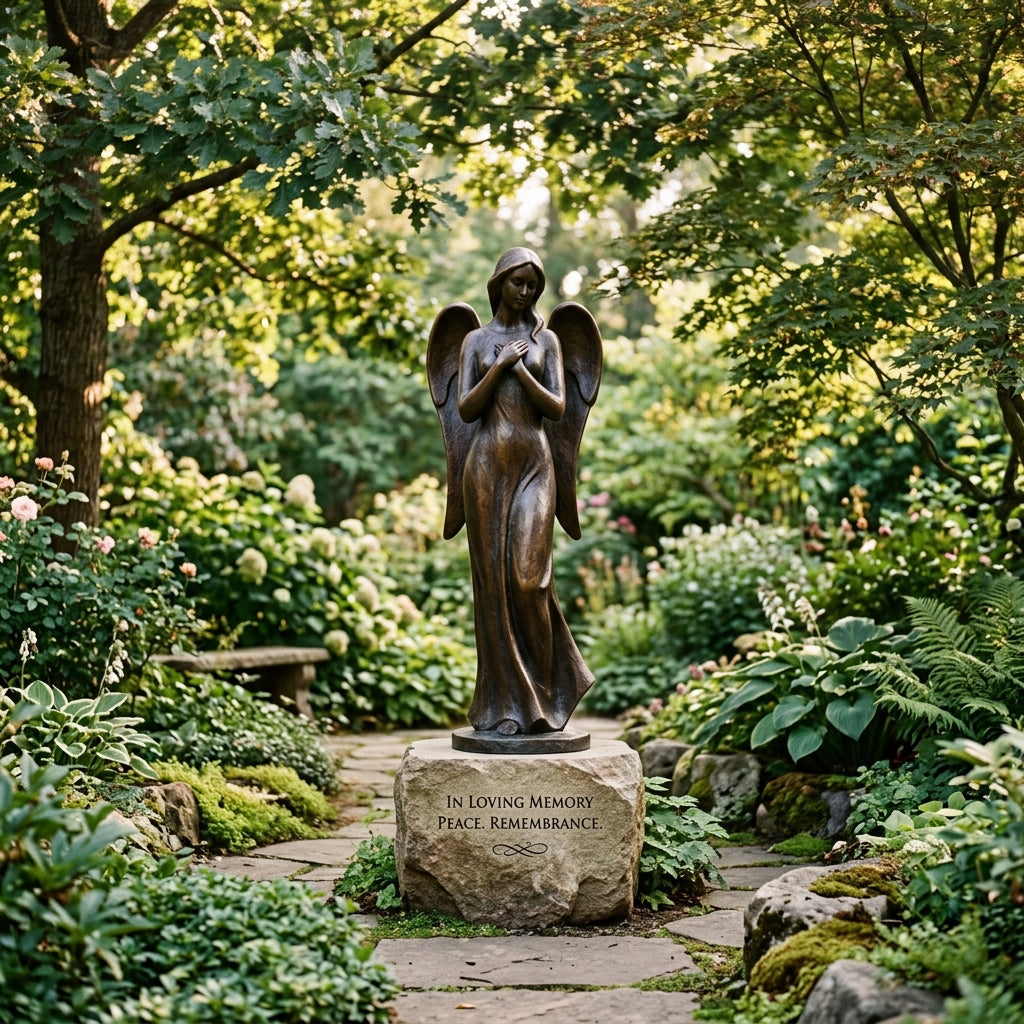
Bronze requires anchoring. Will the statue be bolted into an existing concrete slab, or will it sit atop a dedicated granite or marble pedestal? A pedestal elevates the subject, indicating reverence, and provides an ideal surface for affixing a bronze informational plaque detailing their life and legacy.
Section 4: Establishing Your Budget and Timeline Expectations
Custom bronze casting is an ancient, multi-faceted process combining 3D design, intensive manual clay sculpting, advanced mold-making, and high-heat metallurgy. As such, commissioners must approach timelines and budgets with realistic expectations.
| Process Stage | Estimated Duration | Client Action Required |
|---|---|---|
| Initial Consultation & Quoting | 2 to 4 Weeks | Provide all reference photos, determine scale, and agree on budget. |
| Maquette and Full-Scale Clay | 8 to 16 Weeks | Review photos/videos from the artist. Ask for specific revisions (e.g., "soften the jawline", "adjust the collar"). Grant final approval. |
| Mold Making & Foundry Casting | 10 to 14 Weeks | No action required. The foundry executes the lost-wax process. |
| Welding, Chasing & Patina | 3 to 5 Weeks | Approve the final patina coloration (e.g., French brown, classic dark verdigris). |
*Note: A life-size custom portrait statue generally requires a minimum of 6 to 9 months from signing the contract to final delivery. Attempting to rush the lost-wax process invariably compromises the quality of the art.
Budget Transparency
Bronze commissioning requires a substantial investment due to raw material costs, the foundry labor, and the artist's expertise. When requesting a quote, ensure it is itemized. Does it include the cost of shipping? Does it cover the granite base? Is installation handled by the studio or a third-party contractor? Clear communication eliminates hidden costs down the road.
Section 5: Finalizing the Plaque and Inscription
A tribute is incomplete without narrative context. While the bronze likeness tells the visual story, the plaque tells the historical one. Before the casting is finished, you should finalize the wording of the accompanying plaque.
- Ensure names and dates are triple-checked for accuracy.
- Include a profound quote that encapsulates their life philosophy.
- List key achievements, philanthropic efforts, or defining characteristics.
Frequently Asked Questions
What happens if the clay model doesn’t look like the person?
This is the exact reason the clay review phase exists! It is completely normal for the first draft of the clay to need adjustments. Professional artists expect your honest feedback. You will have opportunities to request specific changes until the likeness is perfectly captured. Once you give formal approval on the clay, it goes to casting and can no longer be altered.
How does the piece arrive, and who installs it?
Large bronze statues are typically shipped in custom-built wooden crates via freight. Depending on your contract, the artist may fly out to oversee the installation, or they may coordinate with your local general contractor or landscaper to bolt the statue securely to its prepared foundation.
How do I maintain the patina over decades?
Bronze requires very little maintenance, which is why it is preferred for monuments. It should be washed annually with mild soap and water to remove bird droppings and debris. Most foundries heavily recommend applying a specialized clear preservation wax once or twice a year to protect the patina from UV fading and harsh weather.
Start Your Commission Journey with VELA SCULPTURE
We specialize in capturing life, emotion, and legacy in museum-quality bronze. If you have gathered your reference photos and are ready to take the next step, our team of artisans is here to guide you.
Request a Project Consultation